

Coaches, teachers, session leaders
Your recurring sessions,
in one place.
A Tuesday yoga class, a Saturday running group, a term of climbing lessons. Publish the series once, and let people enroll for every date in a single tap.
Series enrollment — available now
Publish onceOne series, every date generated
One groupThe same people, week after week
One conversationNot a new chat every session
No adminNo spreadsheet, no message chain
Available today
What you can already run
Recurring activities are live. Publish a series and each date becomes an activity people can find and join.
 1A repeating session
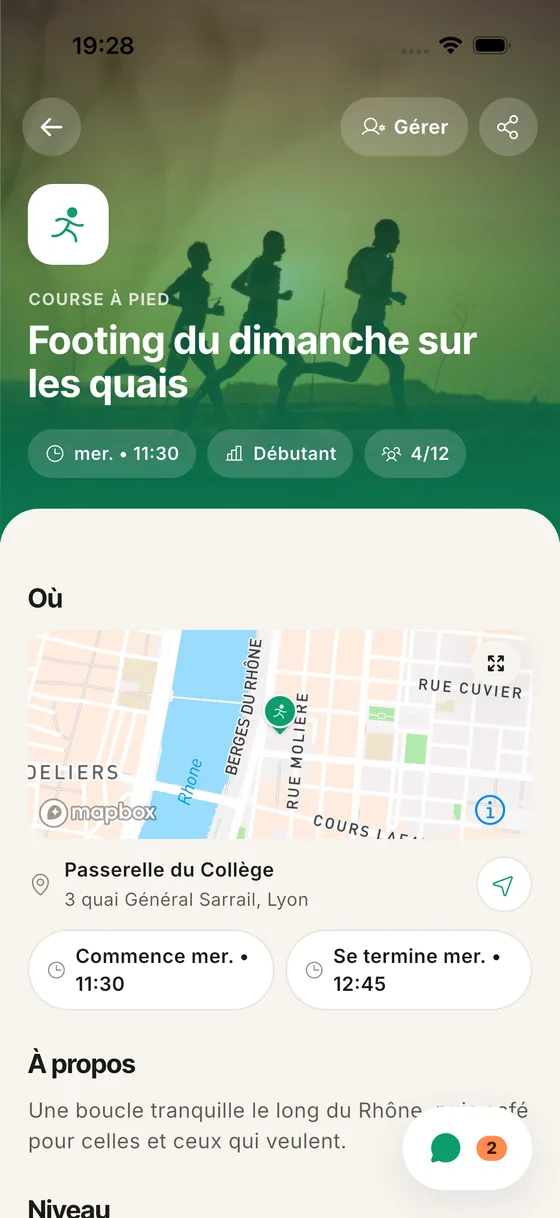 2Found by people nearby
 3A chat per session
 4One groupThe same people, week after week
Series enrollment — available now
Available now
Enrolling for the whole series
Built around what session leaders asked for: people can enroll once for the whole term instead of signing up date by date.
- You choose the horizonFrom this date to that one — one month, a term, a full year, or a set of chosen dates.
- The cadence you actually runOnce a week, several days a week, every other week — or simply the dates you pick.
- Enroll once, for every datePeople join the series in a single tap instead of signing up thirty times.
- One chat for the seriesThe group stays together across the term rather than restarting every week.
- Places held by the seriesYour capacity is the course, not each individual date.
- Absent for one dateSomeone can say they are missing a session without leaving the course.
No money goes through Spody
Enrolling in a series means signing up, not paying. Spody handles who is coming — nothing else.
- No card payment, no in-app purchase, no commission on your course.
- A club license, a term fee or a class card stays between you and your students, exactly as it is today.
- Spody shows the dates, the group and the conversation. The rest is yours.
Run a course? Let’s build this with you.
Tell us how your term is organized and what breaks when you try to manage it by message. That is the most useful first email.